Serving Wilmslow, Cheshire and the North West

Category: Buyer’s Guides

  • Why CHAS Accreditation Matters When You Hire a Commercial Cleaner

    Why CHAS Accreditation Matters When You Hire a Commercial Cleaner

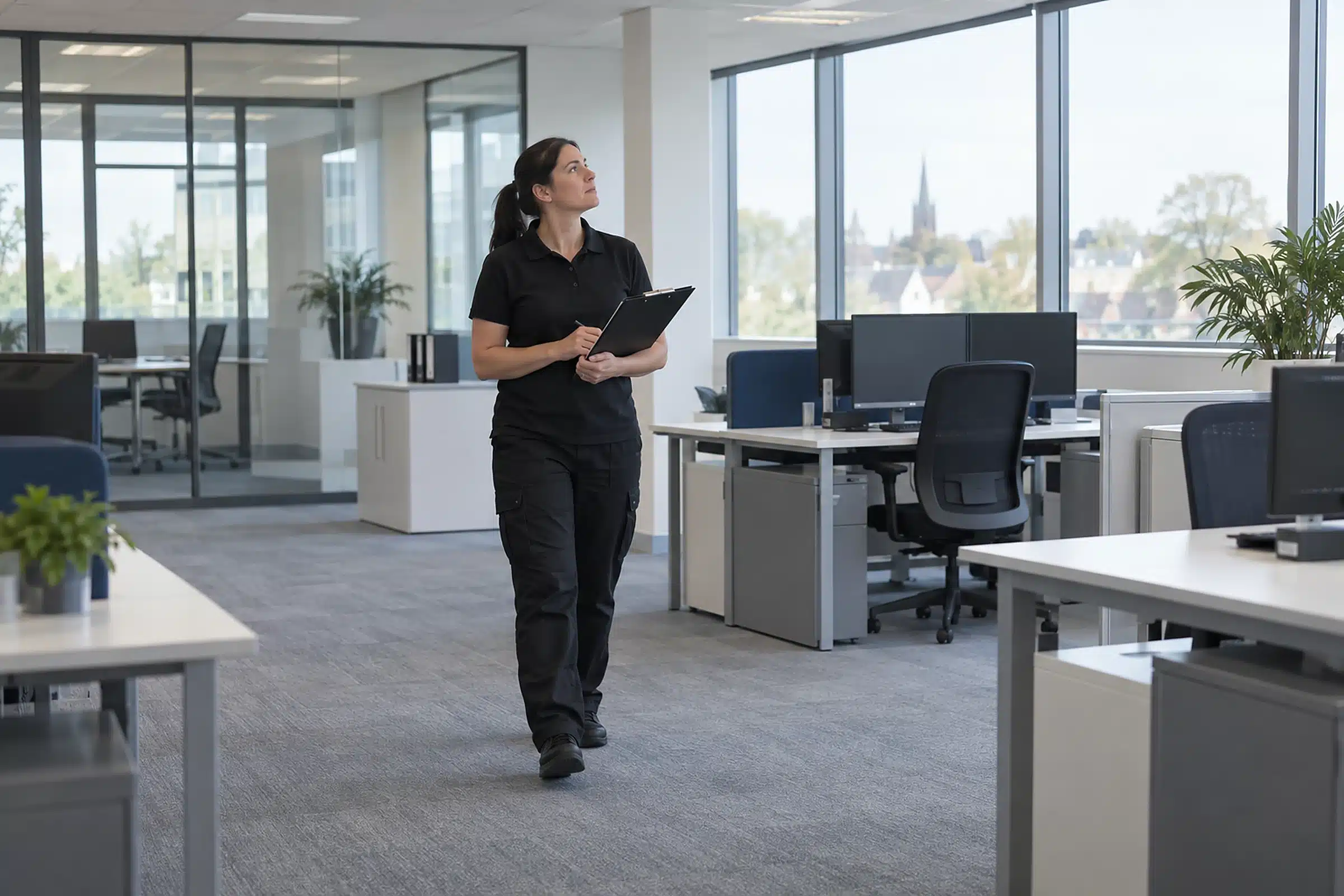
    When you bring a cleaning contractor into your building, you are handing someone keys, access and often the run of the place outside working hours. They will be using chemicals near your staff, working at height on your ledges, trailing cables across your floors and moving equipment through your corridors. Most of the time none of that causes anyone a moment’s thought, which is precisely the problem. It is the contractor who has never thought about it either that you need to worry about.

    This is what accreditation is for. A CHAS accredited contractor has had its health and safety practices examined by an independent body against a national standard, rather than simply asserting on a website that it takes safety seriously. For a facilities manager, an office manager or a business owner comparing quotes, it is one of the few signals in the whole process that has actually been checked by somebody other than the company selling to you.

    What CHAS accreditation actually is

    CHAS stands for the Contractors Health and Safety Assessment Scheme. It is one of the UK’s most established health and safety accreditation schemes and a founding member of SSIP, Safety Schemes in Procurement, which is the framework that lets one assessment be recognised across multiple buyers rather than every client running its own.

    The important word is independent. Any contractor can tell you it works safely. A CHAS accredited one has submitted its policies, records and procedures to an assessor who has reviewed them against a rigorous national benchmark and approved them. It is third-party evidence rather than a claim, and that distinction is the entire value of it.

    What the assessment actually covers

    CHAS looks at the systems and documentation that show a business manages health and safety properly across its real areas of risk. To achieve and keep accreditation, a contractor has to evidence things like:

    • A written health and safety policy
    • Risk assessments and method statements
    • Safe systems of work
    • Adequate insurance cover
    • Staff training and competence records
    • Safe use of materials, including COSHH
    • Accident and incident procedures
    • Equipment and maintenance records
    • Ongoing monitoring and review

    Read that list again with a cleaning contract in mind and it stops being abstract. COSHH is about the chemicals being used in your washrooms and kitchens. Training records are about whether the person on a step ladder dusting a high ledge in your office has been shown how to do it safely. Insurance is about what happens if something goes wrong on your premises. None of it is paperwork for its own sake.

    It is reassessed every year

    This is the part that is easy to miss and worth understanding. CHAS accreditation is not a certificate a business earns once and then displays for the next decade. It is reassessed annually, so a contractor has to keep its policies current, its training records up to date and its procedures in actual use, year after year.

    That matters when you are comparing providers, because it changes what the badge tells you. A current accreditation is evidence of an ongoing discipline rather than a one-off effort made at some point in the past. If a contractor mentions an accreditation, it is entirely reasonable to ask when it was last renewed.

    Why it matters on your premises specifically

    Cleaning is often treated as low-risk work, and compared with construction it is. But it is not no-risk, and the risks sit in places that are genuinely yours to worry about.

    Chemicals around your staff

    Commercial cleaning products are stronger than domestic ones. Used correctly they are perfectly safe. Stored badly, decanted into unlabelled bottles or mixed carelessly, they are not. COSHH compliance is what stands between those two situations, and it is one of the things CHAS looks at.

    Work at height and wet floors

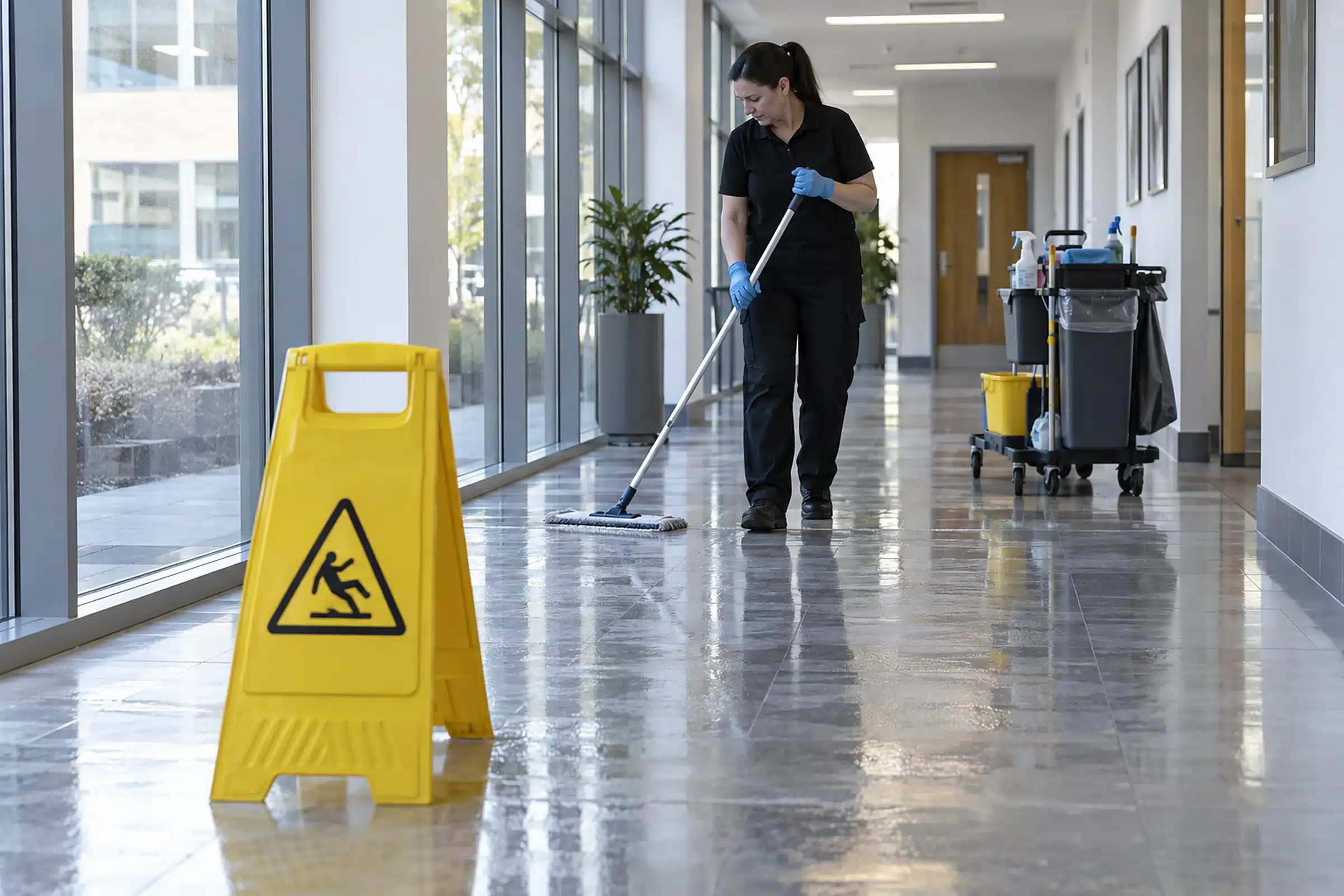
    High-level dusting, light fittings, interior glass and the tops of units all involve some form of working at height. Mopping leaves wet floors. Both are ordinary parts of a cleaning routine and both have an established safe way of being done, including signage and timing that keeps your staff and visitors out of harm’s way.

    Contractors in your building out of hours

    Most commercial cleaning happens early in the morning or in the evening, when the building is quiet and there is nobody from your team around to notice anything. Vetted staff and proper procedures matter more in an empty building, not less.

    Your own duty of care

    Bringing in a properly assessed contractor reduces the health and safety risk attached to having cleaners working on your premises at all. For facilities and office managers who have to be able to account for the contractors on site, an SSIP-recognised accreditation is a recognised shorthand that does a good deal of that work for you.

    How to use it when you are comparing quotes

    Accreditation is most useful as a filter rather than a decision. It tells you a contractor clears a bar. It does not tell you the cleaning will be any good, which is a separate question entirely and one you should keep asking.

    Used sensibly, it fits into a wider set of checks. Our guide on how to choose a commercial cleaning company covers the rest of them, from how a provider covers staff absence to whether the same team will look after your site. A few practical points on the accreditation itself:

    • Ask to see it. A genuinely accredited contractor will produce the documentation without hesitation. Reluctance is informative.
    • Check it is current. Annual reassessment means a lapsed accreditation is a real thing, not a technicality.
    • Ask what it covers in practice. A contractor that understands its own risk assessments can explain them in plain English. One that cannot has bought a badge rather than built a system.
    • Do not stop there. Insurance, references and a proper site visit all still matter, and are covered in our guide on how to prepare for a cleaning quote.

    Where it matters most

    Some settings make accreditation close to non-negotiable. Schools and education sites have safeguarding and documentation expectations of their own, which is part of why school cleaning is treated as a specialism rather than an ordinary contract. Industrial units and warehouses carry heavier site risks. Premises still in the closing stages of building work bring a contractor onto what is effectively a live site, which is one of the things that makes a builders clean a specialist job rather than an ordinary one.

    In an office or a gym the risks are lower, but the reasoning does not change. You are still letting a contractor work unsupervised in a building you are responsible for.

    Common questions about CHAS accreditation

    Is CHAS a legal requirement for cleaning contractors?

    No. It is a voluntary accreditation. The underlying health and safety duties are legal obligations for any employer, but the accreditation itself is a contractor choosing to have its compliance independently assessed rather than simply asserting it.

    Does CHAS accreditation mean the cleaning will be better?

    Not directly, and it would be misleading to claim otherwise. It assesses health and safety management, not how well anyone cleans a washroom. What it does tell you is that the business runs on documented systems rather than improvisation, and in practice that tends to travel across into how the work itself is organised.

    Can I see your accreditation?

    Yes. You can read more on our CHAS accreditation page, and the supporting documentation, including risk assessments and insurance, is available on request before you commit to anything.

    A contractor you can account for

    Welch’s of Wilmslow is a CHAS accredited contractor. Our health, safety and compliance practices have been independently assessed and approved, and that accreditation sits alongside the things we are actually judged on day to day: turning up, holding a standard, and communicating honestly when something needs sorting. You can see the full range of our commercial cleaning services for offices, gyms, schools, retail and industrial premises across Wilmslow, Knutsford, Alderley Edge, Macclesfield, Northwich, Winsford, South Manchester and the wider Cheshire and North West area.

    If you would like a cleaning contractor you can put on site without a second thought, we would be glad to help. Call the team on 07834 341056 or request a tailored quote, and we will arrange a visit to your premises.
  • How to Choose a Commercial Cleaning Company

    How to Choose a Commercial Cleaning Company

    Choosing a commercial cleaning company is not quite like buying a product off the shelf. You are choosing a partner you will rely on week in, week out, to keep your premises presentable, hygienic and welcoming. Get it right and the cleaning simply happens in the background, quietly and consistently, without you ever having to think about it. Get it wrong and it becomes a constant source of chasing, complaints and frustration.

    If you run an office, gym or larger commercial premises across Cheshire or the wider North West, the decision matters. Below are the practical things to look for before you sign a contract, so you can feel confident you are backing the right team for the long term.

    Start with reliability above everything else

    Reliability is the single most important quality in a cleaning provider, and it is the one that is hardest to judge from a glossy brochure. A good cleaning company turns up when it says it will and delivers a consistent standard every visit, without needing to be reminded or chased. That dependability is the whole point of a regular cleaning contract. You are paying for peace of mind as much as for the cleaning itself.

    When you are comparing providers, ask some direct questions about how they keep standards consistent over time:

    • How do they cover staff absence, holidays and sickness so your premises are never left uncleaned?
    • Will the same cleaner or team look after your site, so they get to know it properly?
    • What checks or supervision are in place to make sure the agreed work is actually being done?
    • How do they handle it if something is missed or falls below standard?

    A provider that has clear, confident answers to these questions is one that takes consistency seriously. If you are currently dealing with missed visits or a slipping standard, that is usually a strong hint that it is time to make a change.

    Choose a local and contactable company

    There is a real, practical advantage to working with a cleaning company based near you rather than a distant national operator. A local business is easier to reach, quicker to respond and far more accountable. When you can speak directly to the people responsible for your cleaning, sorting out a change or a concern takes a quick phone call rather than a ticket in a queue.

    Local providers also tend to understand the area and its businesses. They can get to your premises promptly, adjust rotas at short notice and build a genuine working relationship over time. There are plenty of reasons a local cleaning company often works out better than a large, faceless chain, and responsiveness is right at the top of the list.

    Look for a provider that is clear about what is included

    One of the most common causes of friction in a cleaning contract is vagueness about what is actually covered. A good provider will not simply quote a price and leave you guessing. Instead, they will assess your premises properly and set out exactly what is included, how often each task is carried out, and to what standard, so there are no surprises later.

    This clarity protects both sides. You know precisely what you are getting, and the cleaning team knows exactly what is expected of them. Before you even reach the quoting stage, it helps to have a clear idea of your own requirements, and our guide on how to prepare for a cleaning quote walks you through what to think about. It is also worth reading up on what commercial cleaning typically costs so you can judge quotes fairly and understand what sits behind the numbers.

    Insist on trust, training and proper standards

    Your cleaners will often be in your building outside normal hours, with access to your premises and sometimes to sensitive areas. Trust is not optional. Look for a company that trains its staff properly, follows sensible hygiene practices, and is happy to be open about how it operates.

    What good standards look like

    • Trained, vetted staff who know how to clean different surfaces and areas safely and effectively.
    • Sensible hygiene practices such as colour coding of cloths and equipment, which prevents cross contamination between washrooms, kitchens and general areas.
    • Relevant documentation including risk assessments, insurance and health and safety accreditation such as CHAS, provided willingly on request.
    • References and testimonials from similar businesses, which give you a real sense of what working with the company is like.

    A provider that is genuinely proud of its standards will have no hesitation in sharing this information. If a company is evasive about training, documentation or references, treat that as a warning sign. It is also worth understanding what CHAS accreditation actually covers, because it is one of the few claims on a cleaning company’s website that has been checked by somebody independent.

    Value flexibility for the long term

    Your needs will not stay still. Your business might grow, take on more space, change its opening hours or need extra attention at busy times of year. The right cleaning partner can adjust frequency, tasks and timing as your circumstances change, rather than locking you into a rigid arrangement that no longer fits.

    Flexibility is a sign of a provider that sees the relationship as a genuine partnership. When you are reviewing the range of commercial cleaning services a company offers, look for one that can scale up or down with you and adapt the schedule around how your premises are actually used. That adaptability is worth far more over the years than a slightly cheaper but inflexible contract.

    Should you arrange a site visit before quoting?

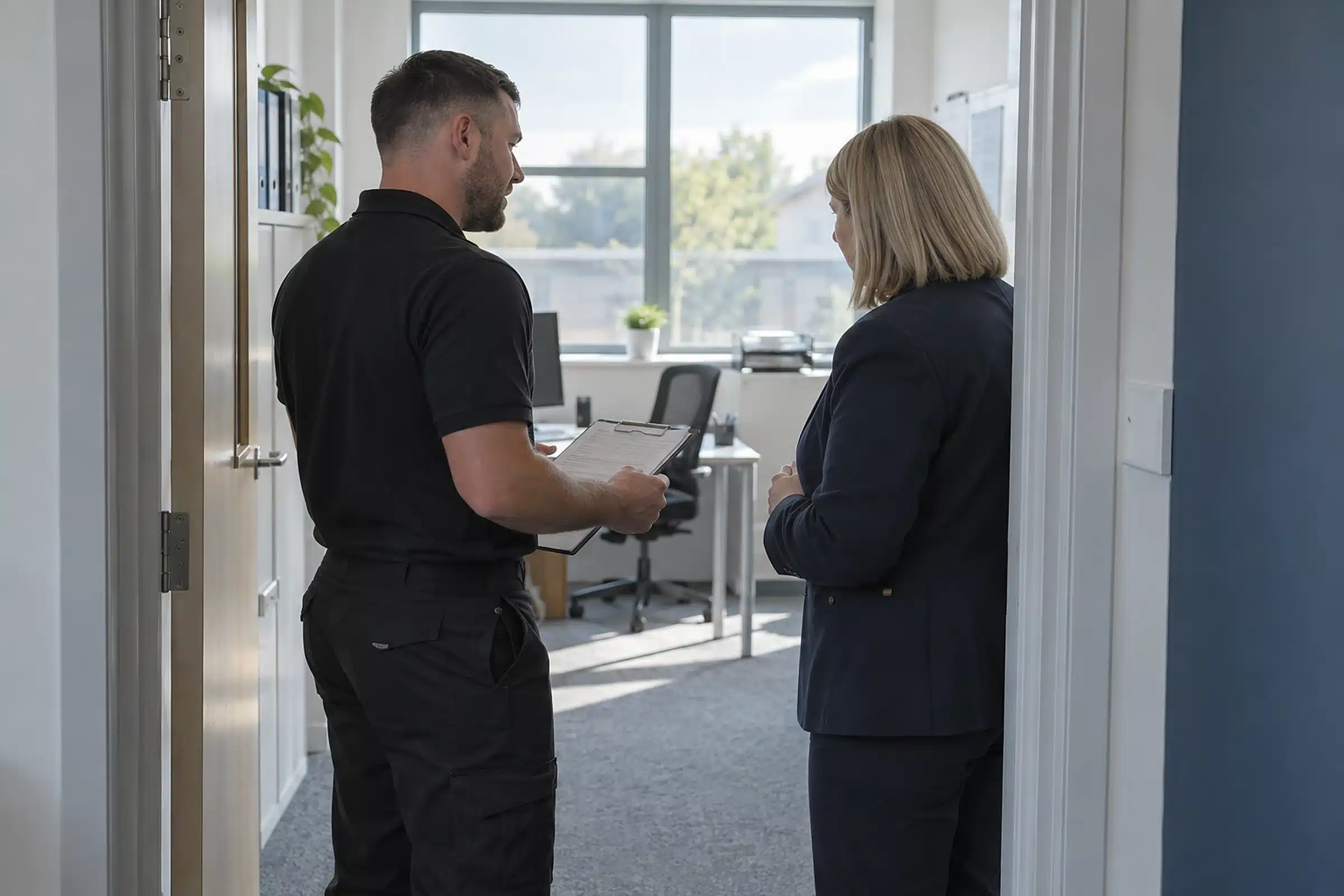
    Yes, and it is one of the clearest indicators of a serious provider. A proper site assessment allows a cleaning company to see the size, layout and condition of your premises, understand how the space is used, and identify any areas that need particular attention. The result is a far more accurate quote and a schedule that genuinely reflects your needs.

    A company that is willing to visit before quoting is showing that it wants to understand your business rather than simply push a standard package. It also gives you the chance to meet the people behind the service and ask the questions that matter to you. A quote produced without ever seeing your premises should be treated with caution.

    Bringing it all together

    When you weigh up a commercial cleaning company, look for reliability first, then a local and contactable team, clear scope, proper standards and genuine flexibility. A provider that ticks these boxes will keep your premises consistently clean and free you to focus on running your business. Welch’s of Wilmslow offers exactly this kind of dependable, ongoing contract cleaning for offices, gyms and larger commercial premises across Wilmslow, Knutsford, Alderley Edge, Macclesfield, Northwich, Winsford, South Manchester and the wider Cheshire and North West area.

    If you would like a straightforward conversation about your requirements, get in touch on 07834 341056 or request a tailored quote and we will arrange a site visit at a time that suits you.

  • What Does Commercial Cleaning Cost? A Guide for Cheshire Businesses

    What Does Commercial Cleaning Cost? A Guide for Cheshire Businesses

    If you are responsible for keeping a workplace clean and presentable, one of the first questions you will ask is a simple one. What does commercial cleaning actually cost? It is a fair question, but the honest answer is that there is no single figure that fits every business. The cost of a commercial cleaning contract depends on your premises, your priorities and the way you want the work carried out.

    This guide explains the main factors that shape the price of ongoing contract cleaning for offices, gyms and larger commercial premises across Cheshire. It will help you understand what you are paying for, why the cheapest quote is rarely the best value, and how to get an accurate figure tailored to your own building rather than a rough guess.

    Why there is no one-size-fits-all price

    Every commercial building is different. A small office suite in Alderley Edge has very different needs to a busy gym in Macclesfield or a large warehouse and office complex in Winsford. Because the work is shaped around the space, the way it is used and how often it needs attention, a reputable cleaning company will always want to understand your premises before quoting.

    Rather than fixating on an hourly rate or a headline figure, it is far more useful to think about the value of a clean, healthy and well presented workplace, and the factors that influence what a fair price looks like for you. Below are the main things that drive the cost of a contract.

    The main factors that affect commercial cleaning costs

    Size and layout of the premises

    Floor area is the most obvious factor. A larger building takes more time and more materials to clean. Layout matters just as much, though. An open plan office is quicker to work through than a warren of small rooms, private offices and corridors. The number of washrooms, kitchens and breakout areas also has a big effect, because these spaces need the most thorough and frequent attention. The mix of surfaces, from carpet and hard flooring to glass and stainless steel, all feeds into how long the work takes.

    Cleaning frequency

    How often you need cleaning is one of the biggest cost drivers. A high traffic gym or a busy customer facing office may need daily cleaning to stay hygienic and presentable, while a quieter office might be well served by a few visits each week. More frequent visits cost more overall, but they also keep standards consistently high and prevent the build up of dirt that makes deeper cleaning necessary later on. The right frequency is a balance between your budget, your foot traffic and the impression you want to give staff and visitors.

    The type of work involved

    General daily or weekly cleaning covers the essentials such as vacuuming, dusting, emptying bins, wiping surfaces and keeping washrooms and kitchens hygienic. The scope you need will depend on your business. A gym has demanding hygiene requirements around equipment and changing areas, while a professional office may prioritise a spotless reception and meeting rooms. The broader and more detailed the specification, the more it influences the price. A clear scope of work is the foundation of an accurate quote, which is why it helps to think about exactly what you need before you approach a supplier.

    Access and out-of-hours requirements

    When the cleaning happens can affect the cost. Many businesses prefer cleaning to take place early in the morning, in the evening or overnight so that the workplace is fresh at the start of the day and the cleaning team does not disrupt staff or customers. Out-of-hours working, weekend cover and any special access or security arrangements all factor into a quote. Straightforward daytime access at a single, easy to reach site is generally simpler to service than a building with restricted access, multiple floors or complex security procedures.

    Specialist tasks

    Beyond routine cleaning, many premises need periodic specialist work. This might include floor care such as buffing, stripping and sealing hard floors, carpet cleaning, high level dusting, window cleaning or a periodic deep clean of kitchens and washrooms. These tasks are often built into a contract on a scheduled basis so that standards are maintained year round without disruption. Because they require specific equipment, products and training, they are priced according to the work involved. Building them into an ongoing agreement is usually more cost effective and reliable than trying to arrange them in isolation.

    How ongoing contract cleaning is typically priced

    Contract cleaning is usually priced as a regular fixed charge, most often monthly, that reflects the agreed scope, frequency and hours of work. This gives you a predictable, budgetable cost rather than a fluctuating bill, which is one of the main advantages of an ongoing agreement over ad hoc arrangements.

    To arrive at that figure, a cleaning company will consider several things together:

    • The size and layout of your premises and the surfaces involved
    • How many visits you need each week and how long each visit takes
    • The detailed scope of work at each visit
    • Any out-of-hours, weekend or special access requirements
    • Scheduled specialist tasks such as floor care or periodic deep cleans
    • The materials, equipment and consumables needed to do the job properly

    Because these elements are weighed up as a whole, the only way to get a genuinely accurate price is to have your specific premises assessed. A tailored quote reflects your real building and your real requirements, not an average that may bear little relation to your situation.

    Why the cheapest quote is rarely the best value

    It is tempting to simply choose the lowest number, but in commercial cleaning the cheapest quote often turns out to be the most expensive decision. A price that looks unusually low is usually low for a reason. It may be based on fewer hours than the job realistically needs, a thinner scope of work, cheaper materials or staff who are stretched too thinly across too many sites.

    The result can be inconsistent standards, high turnover of cleaners, missed tasks and the hassle of constantly chasing your supplier. When that happens, you often end up paying again to put things right, or switching provider and starting the whole process over. Genuine value comes from reliable, consistent cleaning delivered by a properly resourced and well managed team.

    When you compare quotes, look beyond the figure at the bottom of the page. Consider what is actually included, how the company recruits and supervises its staff, whether it holds recognised standards such as CHAS accreditation, and how it handles quality control and communication. Our guide on how to choose a commercial cleaning company walks through the questions worth asking so you can compare suppliers fairly rather than on price alone.

    How to get an accurate, tailored quote

    The best way to understand what commercial cleaning will cost for your business is to arrange a proper assessment of your premises. A good supplier will want to visit, look at the space, discuss how you use it and understand what matters most to you before putting a figure forward. This is the only reliable way to produce a quote that reflects your building rather than a generic estimate.

    You can make the process quicker and more accurate by thinking through a few things in advance, such as your floor area, the number of washrooms and kitchens, how often you want cleaning, your preferred hours and any specialist tasks you know you will need. Our advice on how to prepare for a cleaning quote covers this in more detail and helps you get a like for like comparison between providers.

    Welch’s of Wilmslow provides regular, ongoing commercial cleaning services for offices, gyms and larger commercial premises across Wilmslow, Knutsford, Alderley Edge, Macclesfield, Northwich, Winsford, South Manchester and the wider Cheshire and North West area. Every contract is built around the individual site, so you receive a clear, tailored price rather than a one size fits all rate.

    If you would like to know what a professional cleaning contract would cost for your premises, we are happy to help. Request a tailored quote or call the team on 07834 341056, and we will arrange a convenient time to assess your building and put together a proposal that fits your needs and your budget.

  • How to Prepare for a Cleaning Quote

    How to Prepare for a Cleaning Quote

    A good cleaning quote starts with good information. The more you can tell a commercial cleaning provider about your premises, the way you use them and what matters most to you, the more accurate and genuinely useful their quote will be. A vague enquiry usually leads to a vague number, and a number that does not really reflect what your building needs. A well prepared enquiry, on the other hand, gives you a clear picture of what will be cleaned, how often and at what cost.

    The good news is that preparing for a quote does not take long, and you do not need to have every detail worked out in advance. A little thought before you get in touch goes a long way, and a reliable provider will guide you through anything you are unsure about. Here is how to prepare so that the quote you receive fits your premises, your routine and your budget.

    Know the areas you want cleaned

    Start by making a simple list of the areas you want covered. Walk through your premises, or picture them room by room, and note down each space that needs regular attention. For most commercial buildings this includes offices and desks, washrooms, kitchens and staff break areas, floors and stairwells, reception and any customer-facing or client-facing spaces.

    It helps to be specific about anything that needs particular care. You might have a busy reception that creates a first impression for every visitor, a set of glass partitions that show every mark, or a kitchen that sees heavy use throughout the day. Flagging these areas up front means the quote reflects the real demands of your building rather than a generic assumption.

    Include the spaces that are easy to forget

    Some areas are simple to overlook when you are focused on the main working spaces. Think about entrances and door glass, lifts, corridors, meeting rooms, changing areas in a gym, and any communal or shared spaces. If your premises have several floors or separate units, note that too, as the layout has a real bearing on how the cleaning is organised and priced.

    Think about how often each area needs cleaning

    Different parts of a building need different levels of attention. Washrooms and kitchens usually need cleaning more frequently because of hygiene and heavy use, while quieter storage areas or occasional meeting rooms may need less. Offices often sit somewhere in between, depending on how many people use them and how the space is laid out.

    Have a think about what feels right for each area, but do not worry if you cannot map it all out perfectly. Deciding on the ideal frequency is exactly the kind of thing a good provider will advise on. Drawing on experience across offices, gyms and larger commercial premises, they can suggest a sensible pattern that keeps standards high without paying for cleaning you do not need. Regular, ongoing contract cleaning works best when the frequency is matched to how each space is actually used, and that balance is something you can refine together over time.

    Consider the timing that suits your business

    When cleaning happens can matter as much as what gets cleaned. Think about the times that would work around the way you operate. Many businesses prefer cleaning to take place outside normal working hours, either early before opening or in the evening after closing, so that it does not disrupt staff or customers. Others are happy for cleaning to happen quietly in the background during the day.

    There is no single right answer, and the best arrangement depends on your premises and your routine. A gym with early morning and late evening peaks has very different needs from an office that empties at five. Letting your provider know your opening hours, your busy periods and any times that are off limits helps them build a schedule that fits neatly around your day rather than getting in the way of it.

    Note any specific requirements up front

    Every building has its own particular needs, and mentioning these early saves time and avoids surprises later. The kinds of details worth raising include:

    • Access arrangements. How will cleaners get in and out, and who holds keys or access codes? Are there alarms to set or particular entry procedures to follow?
    • Security. Some premises have specific security requirements, restricted areas or sign-in procedures that a provider needs to know about.
    • Hygiene needs. Kitchens, washrooms, changing rooms and food areas may call for particular attention or specific standards.
    • Particular tasks. If there are areas or jobs that need special care as part of the regular routine, note them so they can be built into the schedule from the start.

    It is also worth mentioning any products or approaches you prefer, along with any sensitivities among your staff or visitors. Providers who take health and safety seriously, such as those holding CHAS accreditation, will be used to working around these considerations and will want to understand them clearly before quoting.

    Expect a site visit

    For an accurate quote, a provider will usually want to see the premises for themselves. A short site visit lets them understand the size and layout of the space, the surfaces and materials involved, the level of use and anything that photographs or descriptions cannot fully convey. It is far more reliable than guessing from a floor plan, and it means the quote you receive reflects your building as it really is.

    A site visit is also a valuable chance for you to ask questions and get a feel for the company. You can talk through your priorities, raise any concerns and see how the provider approaches the conversation. It is one of the clearest signals of whether a firm is the right fit, which is why it features so heavily when you are working out how to choose a commercial cleaning company you can rely on for the long term.

    Understand what shapes the cost

    Once a provider understands your areas, frequency, timing and requirements, they can put together a quote that reflects the real scope of the work. The size of your premises, how often cleaning is needed, the times it takes place and any particular tasks all feed into the figure. Because every building is different, quotes are tailored rather than fixed, which is why the preparation described above makes such a difference to the accuracy of what you receive.

    If you would like to get a sense of what influences pricing before you enquire, our commercial cleaning cost guide explains the main factors in plain terms. It will help you read your quote with confidence and ask the right questions, so you can compare arrangements sensibly and choose the option that offers genuine value rather than simply the lowest headline price.

    A quick checklist before you enquire

    To pull it all together, here is a short list to run through before you get in touch:

    • The areas you want cleaned, including the easy-to-forget spaces
    • A rough idea of how often each area needs attention
    • The times of day that would suit your business
    • Access, security and hygiene requirements
    • Any particular tasks or preferences worth flagging
    • A convenient time for a site visit

    You do not need every answer polished and final. Even a partial picture gives a provider far more to work with than a one-line enquiry, and the rest can be shaped together during the visit.

    When you are ready, Welch’s of Wilmslow will be glad to help. Serving Wilmslow, Knutsford, Alderley Edge, Macclesfield, Northwich, Winsford, South Manchester and the wider Cheshire and North West area, the team can talk through your needs, arrange a site visit and put together a clear, tailored quote for regular, ongoing contract cleaning. Requesting a quote is free and comes with no obligation, so request a quote today or call 07834 341056 to get started.